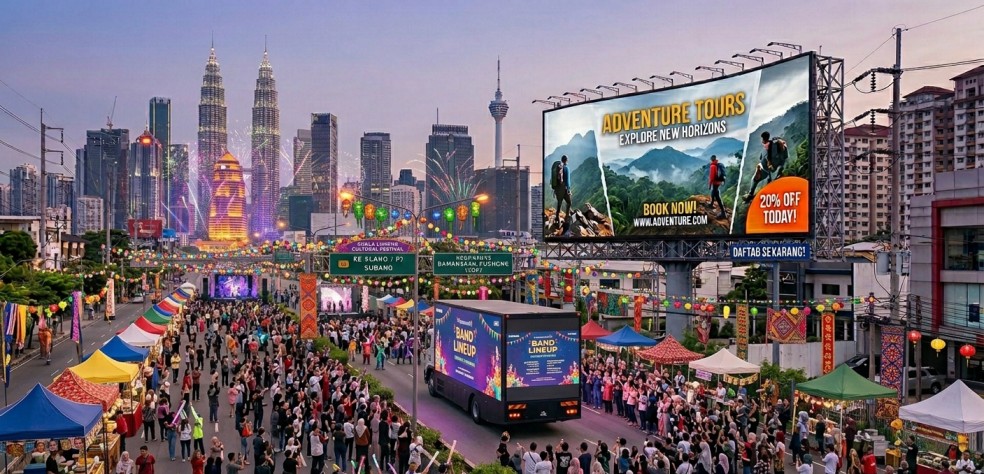
Mobile LED trucks allow businesses to target specific neighbourhoods by routing digital billboards through precise, high-footfall areas at optimal times. By aligning truck routes with local events, lunch hours at commercial districts, or weekend nightlife hotspots, brands can achieve hyper-local visibility and significantly increase engagement compared to static outdoor advertising.
Traditional billboards rely on the hope that your ideal customer happens to drive past a fixed location. Mobile LED trucks flip this dynamic entirely, taking your message directly to the streets where your audience lives, works, and socialises. This form of truck advertising allows businesses to bypass the limitations of stationary media by delivering dynamic, high-definition video content precisely where it will have the maximum impact.
Blanket advertising campaigns often waste resources on broad areas that yield low conversion rates. Hyper-local targeting solves this problem by focusing marketing efforts on hyper-specific geographic perimeters. When a business understands the exact movement patterns of its demographic, it can deploy mobile LED trucks to intersect those daily routines. This precision ensures that marketing budgets are spent efficiently, driving higher return on investment and fostering immediate brand recognition within a chosen community.
Why is hyper-local targeting effective for mobile LED trucks?
Hyper-local targeting works because it relies on context. A message delivered at the exact moment a consumer is making a purchasing decision carries far more weight than a generic advertisement seen hours earlier. Mobile LED trucks capitalise on this by physically moving into the geographic context of the consumer.
Unlike static billboards, mobile LED trucks can update their digital displays in real-time. A restaurant can advertise a breakfast special at 8:00 AM near a busy underground station, and then swap the creative to a lunch promotion by midday when the truck relocates to a nearby corporate estate. This agility ensures the advertising creative remains highly relevant to the time of day and the specific neighbourhood the truck is navigating.
Choose hyper-local targeting if your business relies heavily on local footfall or if you need to build intense brand awareness rapidly in a new territory. It is particularly effective for retail store launches, regional political campaigns, or promoting time-sensitive local events.
How can businesses route LED trucks through high-traffic areas?
Success in mobile digital out-of-home advertising requires strategic route planning. Businesses must map out the exact paths that yield the highest concentration of their target demographic. This involves analysing traffic patterns, pedestrian density, and local event schedules.
How do you target office parks during lunch hours?
For business-to-business (B2B) companies or food service brands, targeting corporate estates and office parks during the lunch rush is highly effective. Between 11:30 AM and 1:30 PM, thousands of employees leave their desks to find food, run errands, or take a walk.
To dominate this window, businesses should route mobile LED trucks slowly through the main arteries of the commercial district. Park the vehicle temporarily near popular cafes, food truck gatherings, or central plazas where footfall is highest. The messaging during this time should be concise and actionable. For example, a local delivery service could display a promo code specifically for workers in that particular office park, creating an immediate incentive to purchase.
What is the best way to target nightlife hotspots on weekends?
Consumer brands, entertainment venues, and ride-hailing applications benefit immensely from targeting nightlife districts on Friday and Saturday evenings. As crowds gather outside pubs, clubs, and restaurants, mobile LED trucks provide a bright, unmissable visual stimulus in an otherwise dark environment.
The ideal route for nightlife targeting involves looping the main entertainment strips between 8:00 PM and midnight. The digital screens should feature vibrant, high-contrast video content that cuts through the visual noise of the street. If your primary demographic is aged 18 to 35, choose weekend evening routes over weekday morning commutes, as this audience is more relaxed, highly social, and more likely to engage with lifestyle or entertainment advertising during these hours.
What data should you use to optimise mobile billboard routes?
Data is the foundation of any successful hyper-local advertising campaign. To determine the most effective routes for mobile LED trucks, marketers must leverage multiple data streams to understand audience behaviour.
Mobile location data provides insights into where specific demographics spend their time. By analysing aggregated, anonymised smartphone location signals, businesses can identify which neighbourhoods contain the highest concentration of their ideal customers at specific times of the day.
Additionally, traffic data helps logistics teams plan routes that balance visibility with practicality. A truck stuck in gridlock might provide prolonged exposure to a few drivers, but a truck moving steadily through a busy pedestrian high street will reach a much larger and more diverse audience. Marketers should also monitor local event calendars. Routing an LED truck past a stadium as a major football match concludes guarantees exposure to tens of thousands of highly energised consumers.
Taking control of your local advertising strategy
Mobile LED trucks offer a level of flexibility and visibility that static outdoor advertising simply cannot match. By embracing hyper-local targeting, businesses can eliminate wasted ad spend and deliver their message directly to the neighbourhoods that matter most.
To get started, define your ideal customer profile and map their daily routines. Identify the commercial districts, high streets, and entertainment hubs they frequent. Then, work with a mobile billboard provider to design a custom route that places your brand right in their line of sight. The streets are your new canvas—it is time to start driving your message home.
Frequently asked questions about mobile LED truck targeting
How much does it cost to hire a mobile LED truck?
The cost of hiring a mobile LED truck varies depending on the region, the duration of the campaign, and the specific time of day. On average, businesses can expect to pay between £500 and £1,500 per day. Weekend and evening routes in premium nightlife districts typically command higher rates due to increased demand and maximum visibility.
Are there legal restrictions on where mobile LED trucks can drive?
Yes. Local councils often have specific regulations regarding digital advertising vehicles. Certain residential neighbourhoods, historic districts, or specific high streets may restrict commercial vehicles or bright digital displays. Always consult with your mobile billboard provider to ensure the planned route complies with all local traffic and advertising laws.
How do you measure the success of a mobile LED truck campaign?
Success is typically measured using a combination of geo-fenced digital tracking and campaign-specific calls to action. Businesses can set up a digital geo-fence around the truck’s route to track how many mobile devices enter the area and subsequently visit the brand’s website. Additionally, using a unique URL, QR code, or promo code displayed solely on the truck allows marketers to track exact conversion rates directly tied to the physical advertisement.
What type of content works best on a mobile LED screen?
Bold, high-contrast imagery and minimal text perform best. Because the audience is often moving, the core message must be digestible within three to five seconds. Avoid paragraphs of text and instead focus on a strong visual hook, a clear headline, and a single, memorable call to action.

コメント