
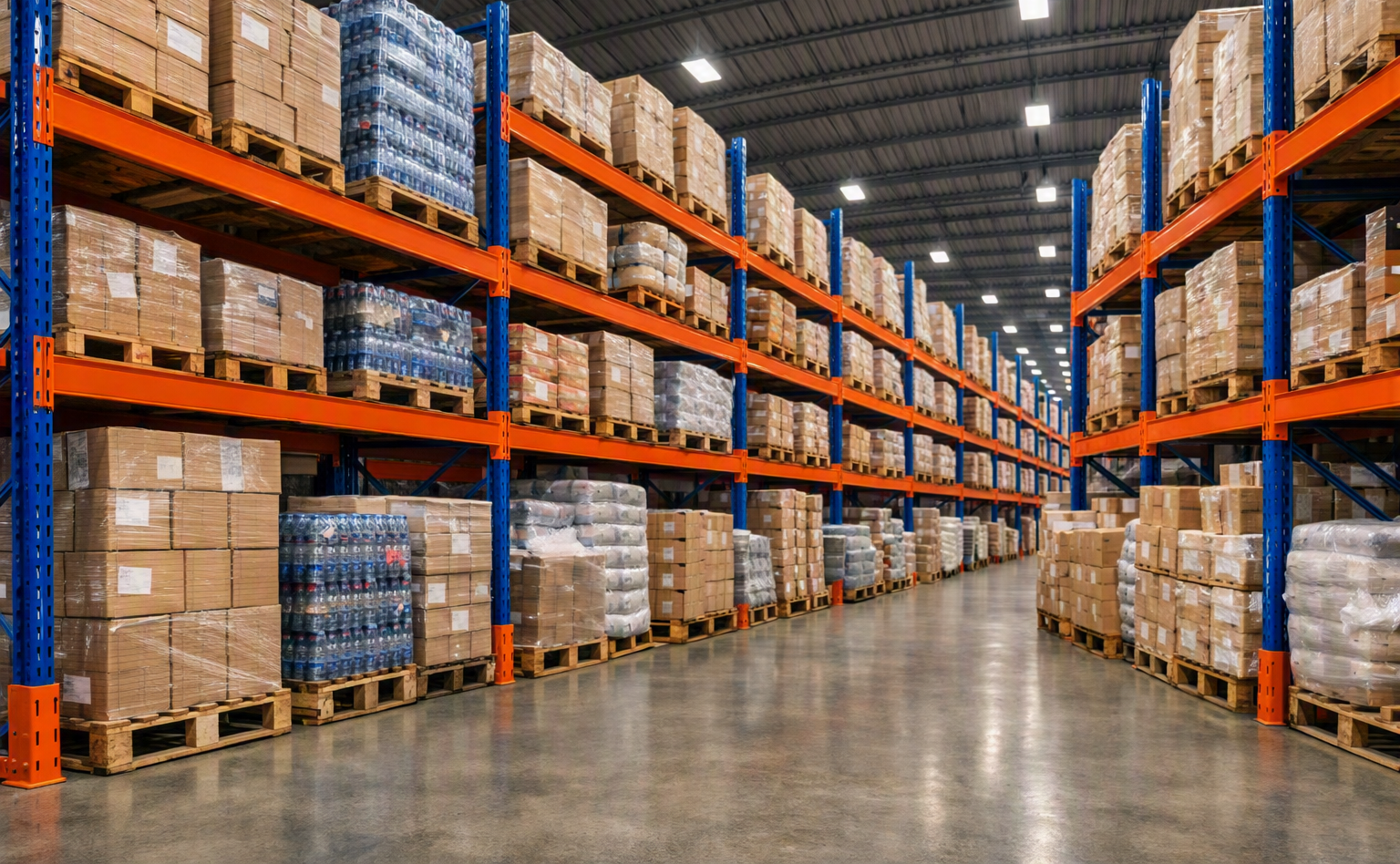
Choosing the right heavy-duty rack is one of the most important decisions you can make when designing or upgrading a warehouse. The right racking system helps you use vertical space efficiently, improve inventory organization, speed up picking and handling, and maintain a safer working environment.
However, warehouse racks are not one-size-fits-all. The best solution depends on factors such as the weight and dimensions of your products, storage capacity, available floor space, handling equipment, warehouse layout, and future growth.
This guide explains the key factors to consider when selecting a heavy duty rack for your warehouse.
- What Is a Heavy-Duty Warehouse Rack?
- Why Choosing the Right Rack Matters
- 1. Determine the Weight of Your Products
- 2. Measure Your Warehouse Space
- 3. Consider the Type of Products You Store
- 4. Choose the Right Type of Heavy-Duty Rack
- 5. Think About Your Material-Handling Equipment
- 6. Evaluate Storage Density Versus Accessibility
- 7. Consider Inventory Turnover
- 8. Don’t Ignore Safety
- 9. Consider Rack Configuration and Adjustability
- 10. Look at the Quality of Materials
- 11. Consider Your Future Storage Needs
- 12. Compare the Total Cost, Not Just the Purchase Price
- 13. Work With an Experienced Rack Supplier
- Common Mistakes to Avoid
- A Simple Decision-Making Process
- Final Thoughts
What Is a Heavy-Duty Warehouse Rack?
A heavy-duty rack is a storage system designed to support substantial loads while allowing goods to be stored in an organized and accessible manner. These systems are commonly used in warehouses, distribution centers, manufacturing facilities, workshops, and industrial storage areas.
Heavy-duty racks typically consist of vertical frames, horizontal beams, decking or supports, and various accessories. Depending on the design, they can accommodate pallets, cartons, machinery, raw materials, containers, and other bulky or heavy products.
Unlike light-duty shelving, heavy-duty pallet racking is engineered to handle significantly higher loads and withstand the demands of regular warehouse operations.
Why Choosing the Right Rack Matters
Selecting the wrong rack can lead to wasted warehouse space, difficult inventory access, unnecessary handling costs, and potential safety problems.
A properly selected system can help you:
- Maximize available vertical storage space
- Store heavier products safely
- Improve inventory visibility and organization
- Reduce unnecessary movement of goods
- Make better use of forklifts and other handling equipment
- Increase warehouse productivity
- Adapt storage capacity as your business grows
- Create clearer and safer working aisles
The goal is not simply to purchase the strongest rack available. Instead, you should choose a system that matches your products, operations, space, and budget.
1. Determine the Weight of Your Products
Load capacity should be one of the first things you consider.
Before selecting a rack, determine the maximum weight that each storage position will need to support. Consider both the weight of individual products and the combined load of pallets or containers.
For example, if a pallet weighs 800 kg when fully loaded, the rack beam and overall system must be appropriately rated for the required configuration and number of pallets stored at that level.
Avoid estimating load requirements based only on your current average inventory. Consider your heaviest expected loads and allow for operational realities.
It is also important to understand that rack capacity depends on more than the thickness of the steel. Factors such as beam length, frame height, upright configuration, number of storage levels, and installation conditions can affect the system’s capacity.
Always obtain the manufacturer’s rated load information and follow its specifications.
2. Measure Your Warehouse Space
Accurate measurements are essential before purchasing a rack system.
Measure:
- Total floor area
- Ceiling height
- Column locations
- Doorways and loading areas
- Aisle widths
- Emergency exits
- Sprinkler and fire-protection clearances
- Lighting and ventilation equipment
- Existing machinery and fixed installations
Don’t focus only on floor space. One of the biggest advantages of heavy-duty racking is the ability to use vertical space.
A taller rack can dramatically increase storage capacity, but only if the building, handling equipment, fire-protection requirements, and operational processes allow it.
3. Consider the Type of Products You Store
Your products will strongly influence which rack design is appropriate.
Think about:
- Product weight
- Product dimensions
- Pallet size
- Product shape
- Packaging type
- Fragility
- Turnover rate
- Whether products are stored individually or in pallets
- Whether products require direct access
For example, standardized palletized goods may work well with selective pallet racking, while long materials such as pipes, timber, or steel sections may require a different storage configuration.
If your inventory consists of many different SKUs, accessibility may be more important than maximum storage density.
4. Choose the Right Type of Heavy-Duty Rack
There are several major warehouse racking systems, and each has different advantages.
Selective Pallet Racking
Selective pallet racking is one of the most versatile options for warehouses.
It provides direct access to individual pallet positions, making it suitable for operations with many SKUs and frequent inventory movement.
Best for:
- High SKU variety
- Frequent picking
- General warehousing
- Businesses that need direct pallet access
Its main advantage is flexibility, although it may not provide the highest possible storage density.
Drive-In Racking
Drive-in racks allow forklifts to enter storage lanes, creating a high-density storage arrangement.
They can make better use of warehouse space than selective systems, but access to individual pallets is more limited.
Best for:
- High quantities of similar products
- Lower SKU variety
- Bulk storage
- Products that can be managed using a suitable inventory rotation strategy
Double-Deep Racking
Double-deep systems place pallets two positions deep, increasing storage density compared with conventional selective racking.
They can be useful when you want additional capacity while retaining relatively good accessibility.
However, specialized forklift equipment may be required.
Push-Back Racking
Push-back racking uses inclined rails and carts to store multiple pallets deep. Loading a new pallet pushes existing pallets farther into the lane.
This system can provide higher density while allowing multiple product lanes.
It is particularly useful when you have several pallets of the same SKU but still need relatively efficient access.
Pallet Flow Racking
Pallet flow systems use rollers to move pallets through storage lanes.
They can support efficient stock rotation and are often useful for operations where first-in, first-out inventory management is important.
Best for:
- High-volume operations
- Perishable products
- FIFO inventory systems
- Distribution environments
Cantilever Racking
Cantilever racks are designed for long or unusually shaped items.
They are commonly used for:
- Pipes
- Lumber
- Metal sections
- Furniture components
- Long construction materials
The absence of front columns makes loading and unloading long products easier.
5. Think About Your Material-Handling Equipment
Your rack should work with the equipment used in your warehouse.
Consider whether you use:
- Counterbalance forklifts
- Reach trucks
- Narrow-aisle forklifts
- Pallet jacks
- Stackers
- Cranes
- Manual handling
Forklift turning radius and lifting height can influence rack configuration and aisle requirements.
For example, selecting a very narrow rack layout may increase storage capacity but become impractical if your forklift cannot safely operate within the available aisle.
The storage system and material-handling equipment should therefore be designed as one integrated system.
6. Evaluate Storage Density Versus Accessibility
One of the most important trade-offs in warehouse design is storage density versus accessibility.
High-density systems can store more goods in less space, but they may provide less direct access to individual pallets.
Selective racking, on the other hand, offers excellent accessibility but generally requires more aisle space.
Ask yourself:
Do I need maximum storage capacity, or do I need maximum access to inventory?
If products move rapidly and you frequently need individual pallets, accessibility may be the priority.
If you store large quantities of the same product and inventory does not need to be accessed frequently, a denser system may provide better value.
7. Consider Inventory Turnover
Your inventory turnover rate should influence your rack selection.
Fast-moving products generally benefit from easy access. Slow-moving products may be better candidates for higher-density storage.
You should also consider your inventory rotation method, such as:
- FIFO — first in, first out
- LIFO — last in, first out
- Batch storage
- SKU-based storage
Choosing a racking system that complements your inventory strategy can reduce unnecessary handling and improve warehouse efficiency.
8. Don’t Ignore Safety
Safety should never be treated as an optional feature.
A heavy-duty rack must be properly designed, installed, loaded, inspected, and maintained.
Important considerations include:
- Rated load capacity
- Upright and beam condition
- Proper anchoring
- Rack protection
- Impact protection
- Stable pallet placement
- Appropriate aisle dimensions
- Forklift operating practices
- Regular inspections
- Compliance with applicable local requirements and recognized industry standards
Rack components should not be modified without appropriate engineering approval. Damaged beams, uprights, connectors, or other structural components should be assessed and repaired or replaced appropriately.
Warehouse staff should also understand loading limits and safe operating procedures.
9. Consider Rack Configuration and Adjustability
Your inventory may change over time, so flexibility can be valuable.
Adjustable beams allow storage levels to be changed to accommodate different product heights.
This can help you avoid wasting vertical space.
For example, if one product requires 1.5 meters of clearance while another requires only 0.8 meters, adjustable levels can allow the available space to be used more efficiently.
When evaluating a rack system, ask whether additional levels, accessories, or configuration changes can be added later.
10. Look at the Quality of Materials
Heavy-duty racks need to withstand repeated loading, unloading, forklift activity, and everyday warehouse conditions.
When comparing suppliers, evaluate:
- Steel quality
- Upright design
- Beam construction
- Connection system
- Surface finish
- Welding and manufacturing quality
- Load-rating documentation
- Quality-control procedures
- Availability of replacement components
The cheapest system is not necessarily the least expensive option in the long run.
A rack that is durable, properly engineered, and supported by a reliable supplier can provide better long-term value.
11. Consider Your Future Storage Needs
Warehouse requirements rarely stay the same.
Your business may introduce new products, increase inventory levels, change packaging, or expand into new markets.
When choosing a rack, think beyond today’s requirements.
Ask:
- Will inventory volume increase?
- Will pallet sizes change?
- Will I need more storage levels?
- Could the warehouse layout change?
- Can the system be expanded?
- Are replacement components readily available?
Planning for future requirements can prevent expensive redesigns later.
12. Compare the Total Cost, Not Just the Purchase Price
The initial rack price is only one part of the total cost.
Consider:
- Rack purchase price
- Installation
- Floor preparation
- Anchoring
- Protective accessories
- Decking
- Forklift requirements
- Maintenance
- Replacement components
- Future expansion
- Inspection and repair costs
A lower-priced rack may become more expensive if it requires major modifications or creates operational inefficiencies.
Instead, compare the expected value of each system over its useful life.
13. Work With an Experienced Rack Supplier
A reputable supplier should do more than sell you steel components.
Ideally, they should help evaluate your warehouse layout, load requirements, product characteristics, and handling processes.
Before selecting a supplier, ask for:
- Load-capacity information
- Technical drawings
- Product specifications
- Installation details
- Warranty information
- Maintenance recommendations
- Relevant compliance documentation
- References or examples of comparable installations
Be cautious of suppliers who recommend a rack without asking about your products, loads, warehouse dimensions, and operating equipment.
Common Mistakes to Avoid
Choosing Based Only on Price
The cheapest rack may not provide the required capacity, durability, flexibility, or safety features.
Ignoring Vertical Space
Many warehouses focus heavily on floor area and fail to take advantage of available ceiling height.
Overloading Racks
Exceeding the rated capacity can compromise the structural integrity of the system and create serious safety risks.
Designing Aisles Too Narrow
A storage layout that looks efficient on paper may be difficult or unsafe to operate.
Forgetting Future Growth
A system that perfectly fits today’s inventory may become inadequate as your business expands.
Mixing Incompatible Components
Rack components should not be mixed or modified casually. Components need to be compatible and appropriate for the intended configuration.
Neglecting Inspections
Even a well-designed rack can be damaged by forklifts or other equipment. Regular inspection and prompt attention to damage are essential.
A Simple Decision-Making Process
If you’re unsure where to start, follow this basic process:
- Measure the warehouse. Record floor dimensions, ceiling height, obstructions, doors, exits, and other fixed features.
- Analyze your inventory. Document product dimensions, weights, pallet sizes, SKU counts, and turnover rates.
- Determine storage requirements. Calculate the number of pallet positions or storage locations required.
- Review handling equipment. Identify forklift types, lifting heights, turning requirements, and aisle needs.
- Compare rack types. Evaluate selective, drive-in, push-back, pallet flow, cantilever, and other systems as appropriate.
- Establish safety requirements. Review load ratings, anchoring, protection, inspection, and applicable regulations or standards.
- Plan for expansion. Choose a system that can accommodate reasonable future changes.
- Request professional designs and quotations. Compare suppliers based on technical suitability and total value rather than price alone.
Final Thoughts
Choosing the right heavy-duty rack is about much more than finding a strong storage structure. The right system should fit your products, warehouse dimensions, handling equipment, inventory strategy, safety requirements, and future plans.
Start by understanding what you need to store and how your warehouse operates. Then compare different racking configurations based on capacity, accessibility, storage density, flexibility, safety, and total cost.
A well-designed racking system can transform unused vertical space into valuable storage capacity while making warehouse operations more organized and efficient. With careful planning and the support of a qualified supplier, you can choose a heavy-duty rack that meets today’s demands and continues to support your warehouse as it grows.

コメント